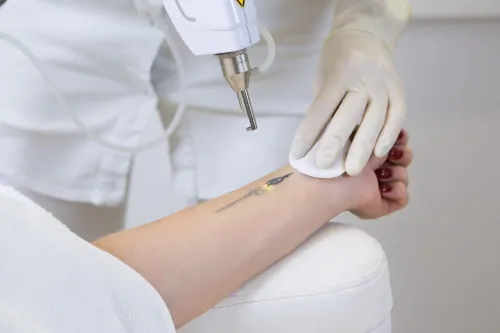
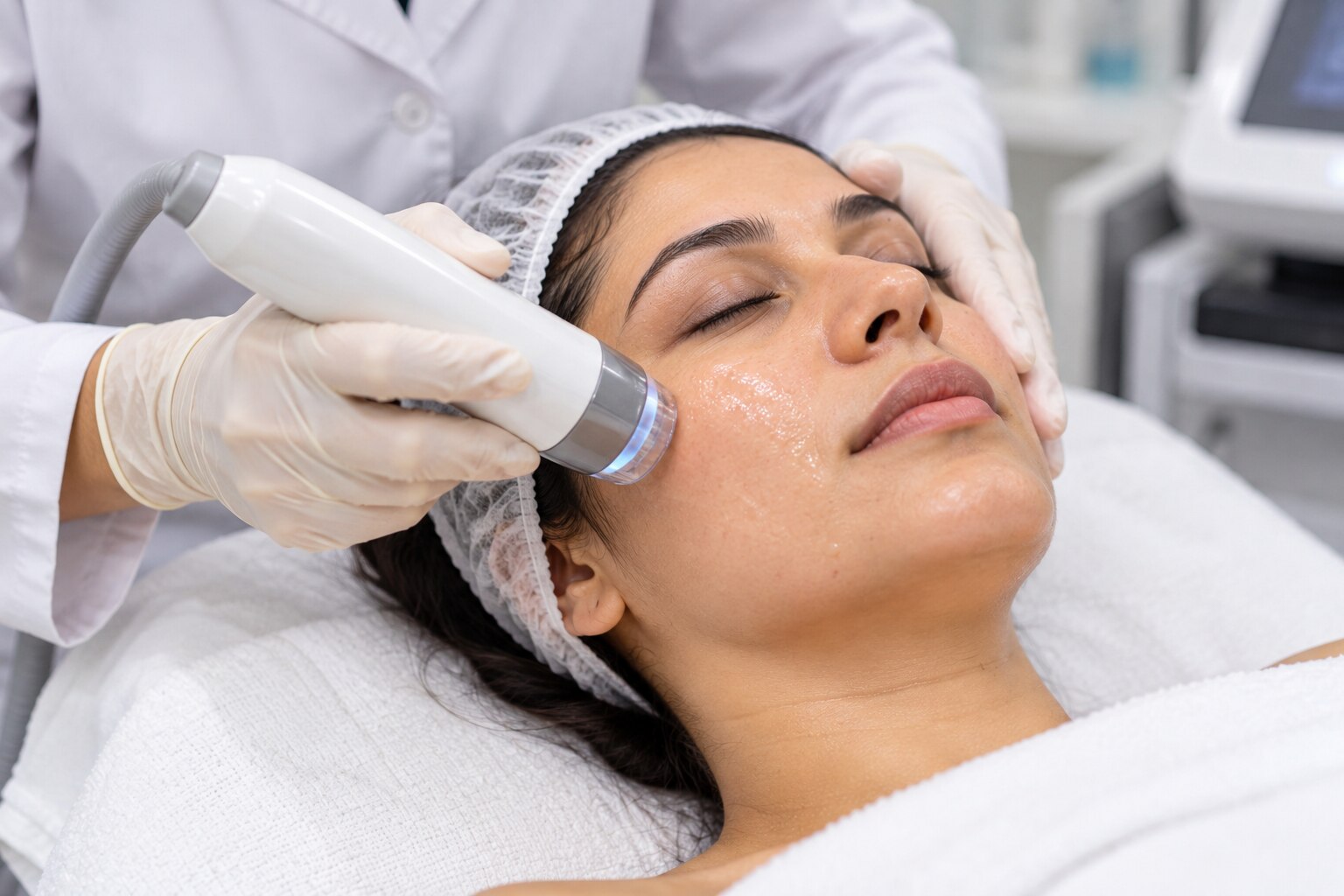
Fine lines and rough texture do not all arise from the same process: facial movement, dehydration, sun exposure, acne scarring, irritation, and volume loss require different responses. By the end, you will be able to identify which changes justify treatment, compare realistic options, and understand the assessment, recovery, and maintenance each one involves.
Key takeaways
- Static wrinkles visible at rest are stronger treatment candidates than expression lines.
- Identify whether aging, sun damage, or irritation caused the texture change.
- Match treatment to surface texture, collagen loss, pigment, or muscle movement.
- Protect treated skin from sunlight to help maintain results.
Which Fine Lines and Texture Changes Are Suitable for Treatment?
A line is more likely to benefit from treatment when it remains visible in neutral expression, appears in consistent lighting, or accompanies a persistent change in surface texture. A crease that appears only while smiling is usually a normal expression line; a crease visible as static wrinkles at rest is a more defined treatment concern.
- Dehydration lines look shallow and improve after moisturizer, gentle cleansing, and a few days without excessive exfoliation. Their quick response points to surface water loss, not lost collagen.
- Early static lines remain after hydration and facial relaxation. Retinoids, resurfacing, or other clinician-selected treatments work gradually and require maintenance.
- Roughness, uneven surface, enlarged pores, acne-scar texture, and photodamage are persistent targets when irritation or active breakouts are not causing them.
- Dynamic wrinkles from repeated forehead, glabellar, or eye movement can be treated differently from etched lines. Movement-reducing injectables target muscle activity; they do not smooth rough skin or replace resurfacing.
| Pattern | What you notice | What it suggests |
|---|---|---|
| Dynamic wrinkles | Appear with frowning, smiling, or squinting and soften at rest | Normal movement pattern; treatment is optional and movement-focused |
| Static wrinkles at rest | Remain visible with a relaxed face | Established line; discuss collagen-supporting or resurfacing options |
| Dehydration lines | Fine creases fluctuate and improve with moisturizer | Temporary surface dryness; restore the barrier first |
| Rough or uneven texture | Persists across days and lighting conditions | Assess for photodamage, scars, or a skin disorder before treatment |
Redness, scaling, burning, itching, crusting, or a new rough spot needs diagnosis before cosmetic treatment because eczema, rosacea, contact dermatitis, and actinic keratoses can mimic “texture.”
Is the Texture From Aging, Sun Damage, or an Irritated Skin Condition?
Before treating roughness, enlarged pores, uneven tone, or fine lines, rule out inflammation, infection, dehydration, and sun-related disease. The wrong procedure can intensify redness, trigger pigment changes, or delay treatment for a condition that only resembles aging.
1. Check whether the surface is irritated. Burning, itching, scaling, tightness, or sudden roughness points toward eczema, rosacea, contact dermatitis, or excessive exfoliation rather than ordinary aging. Eczema and fine lines can coexist, but resurfacing inflamed skin can worsen both.
2. Check for active acne or infection. New pustules, crusting, cold sores, or inflamed bumps need treatment before microneedling, peels, or laser. Acne-related texture is assessed after active breakouts settle, because procedures can spread infection or aggravate inflammation.
3. Check whether sun damage needs diagnosis. Persistent scaly spots, a rough patch that repeatedly bleeds, or a sore that does not heal requires assessment for actinic keratosis before cosmetic treatment. Photodamage can cause fine wrinkles, mottled pigment, and rough texture, but not every rough spot is cosmetic.
A clinician should also separate dehydration lines from etched-in lines and distinguish dynamic wrinkles from texture visible at rest. Pause new acids, scrubs, and retinoids for assessment if your skin is stinging or peeling; treating excessive exfoliation with stronger exfoliation prolongs the problem.
Once the skin is calm and suspicious lesions are excluded, treatment can target the actual cause.
Which Treatment Matches the Problem: Surface Texture, Collagen, Pigment, or Movement?
Match the treatment to the change: sunscreen prevents further photodamage, while procedures and prescription products target existing changes in different ways.
| Option | Main target | Improvement and trade-off |
|---|---|---|
| Sunscreen | Ultraviolet-driven pigment, wrinkles, and texture | Prevents worsening; it does not erase established lines. |
| Moisturizer | Dehydration lines and rough surface | Plumps the outer skin within days, but does not remodel collagen. |
| Retinoids for fine lines | Collagen loss, fine wrinkles, uneven tone, and texture | Prescription tretinoin can produce meaningful improvement over months; irritation and ongoing maintenance are common. |
| Chemical peel for skin texture | Surface roughness, dullness, and some pigmentation | Results range from subtle to noticeable by peel depth; redness, peeling, and pigment changes are possible. |
| HydraFacial for dehydration | Surface buildup and temporary dehydration | Gives short-term smoothness and glow; it does not correct etched lines or deep scars. |
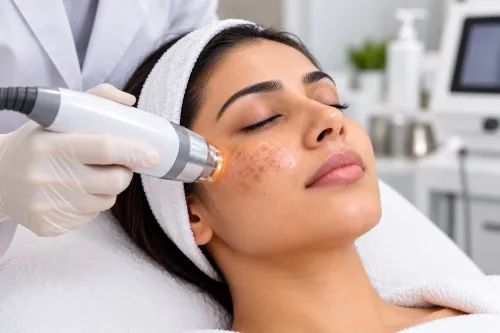
| Microneedling | Fine wrinkles and acne-scar texture | Stimulates gradual collagen repair, usually across several sessions; it is not suitable over active infection. |
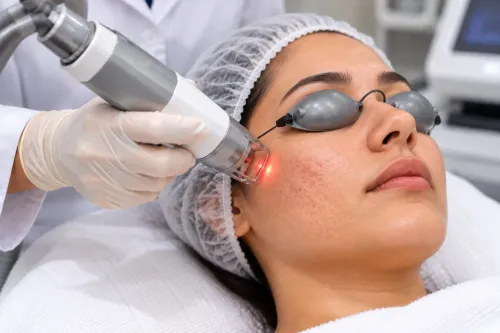
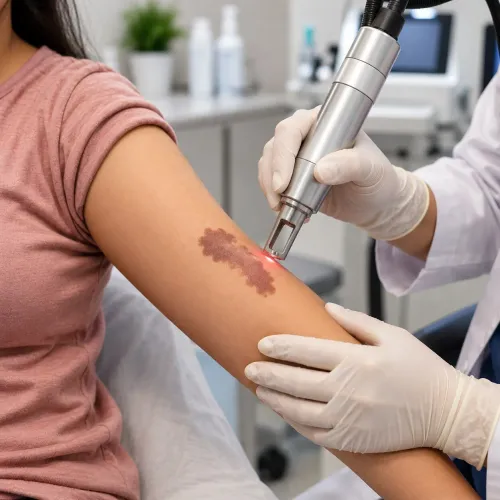
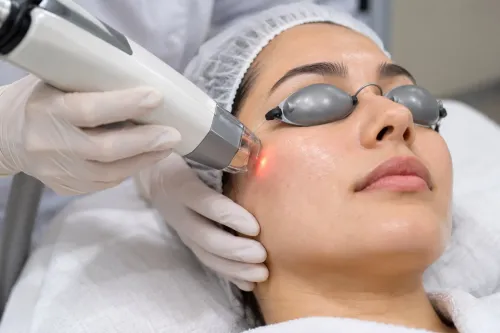
| Fractional laser resurfacing | Photodamage, fine wrinkles, and uneven texture | Often produces stronger resurfacing than gentle treatments, with downtime and risks including prolonged redness and pigment changes. |
| Injectables | Movement lines or volume loss | Botulinum toxin softens forehead, glabellar, and crow’s-feet lines by reducing muscle activity; it does not resurface rough skin. |
Choose based on the problem, not the treatment’s popularity. A dynamic line needs movement control, while a static line, enlarged pore, or rough patch needs collagen or surface treatment; persistent irritation requires diagnosis before either. Improvements also fade as new ultraviolet damage accumulates, so daily broad-spectrum SPF 30 or higher remains part of every plan.
What Will a Dermatologist Check, and What Is Recovery Like?
A clinician chooses treatment after examining the line or texture at rest and during facial movement, checking your Fitzpatrick skin phototype, medical history, medications, tanning, previous procedures, and tendency to scar or develop pigment changes. Eczema, rosacea, contact dermatitis, infection, active acne, or actinic keratoses must be addressed before resurfacing.
The appointment should include photographs, a discussion of expected improvement, pain, cost, number of sessions, and recovery. For darker phototypes, ask how the plan reduces post-inflammatory hyperpigmentation: settings, device choice, pigment pretreatment, and strict sun protection need individual adjustment. Do not proceed over inflamed or infected skin.
| Treatment | Best fit | What to expect after |
|---|---|---|
| Microneedling | Mild wrinkles, enlarged pores, and acne-scar texture | Microneedling downtime usually involves redness, warmth, and sensitivity for a few days; improvement develops gradually over a series |
| Fractional laser | Photodamage, etched lines, and uneven texture | Laser treatment recovery ranges from mild redness to several days of peeling; pigment changes, acne, milia, infection, and prolonged redness are possible |
| Chemical peel or HydraFacial | Superficial roughness, dullness, or uneven tone | Peels can sting and flake, while HydraFacial usually has little downtime; excessive acid use increases irritation and pigment risk |
Dr. Swati Gurav Dermatologist & Cosmetologist can use this assessment to decide whether a gentler surface treatment is safer than laser or needling, especially when pigmentation or irritation is already present. Follow the aftercare exactly: use the prescribed cleanser and moisturizer, avoid picking, pause irritating actives, and apply broad-spectrum sunscreen.
Related services
Laser Facial Revitalize your skin with an advanced Laser Facial at Dr. Gurav’s Skin Hair Laser Clinic, Dombivli. Performed by Dr. View service → |
Advanced Cosmetology Treatments Advanced Cosmetology Treatments Dr. Swati Gyrav is a trusted cosmetology specialist in Dombivli, known for providing advanced aesthetic and skin care treatments with a personalized... View service → |
When Will Results Appear, and How Do You Keep Them?
A realistic antiaging treatment results timeline depends on the method. Moisturizer or a hydrating facial can soften dehydration lines quickly, but the effect may last days to weeks. Retinoids usually need several months, while microneedling and fractional laser rely on collagen remodeling, with changes developing over weeks to months.
| Treatment pattern | When improvement appears | How several sessions affect results |
|---|---|---|
| Microneedling or nonablative laser | Gradual change over 1–3 months | A series spaced several weeks apart can build modest texture improvement |
| Fractional resurfacing or deeper peel | Early change during healing; fuller change over months | One treatment may be substantial, but additional sessions increase downtime and pigment risk |
| Prescription tretinoin | Fine lines and texture improve over several months | Ongoing use maintains gains; stopping allows changes to return |
Several sessions make sense when each treatment produces measurable improvement, the concern is suitable for gradual correction, and you accept the added cost, downtime, pain, and risk. Repeating a procedure will not prevent new photodamage.
- Apply a broad-spectrum SPF 30 sunscreen generously every morning; reapply during prolonged outdoor exposure, and add shade, hats, and sunglasses.
- Continue a skin maintenance routine with gentle cleansing, moisturizer, and a retinoid when prescribed and tolerated.
- Reduce irritation from scrubs, frequent acids, and picking, because inflammation can worsen uneven tone and texture.
- Schedule review if redness, scaling, acne, or pigment changes persist instead of repeatedly treating them as aging.
Frequently asked questions
Which fine lines and texture changes are suitable for treatment?
Lines that remain visible at rest, appear consistently in neutral expression, or occur with persistent roughness are suitable concerns for assessment. Lines that appear only during facial movement are usually expression lines.
How can you tell whether texture comes from aging, sun damage, or irritation?
A dermatologist checks the pattern, location, timing, symptoms, and skin history. Roughness with redness, itching, burning, or flaking points toward irritation and needs evaluation before cosmetic treatment.
How is treatment matched to the cause of fine lines or texture changes?
Surface roughness may need skin-renewal treatment, collagen loss may need collagen-stimulating procedures, pigment needs a pigment-focused plan, and movement-related lines may respond to muscle-relaxing treatment.
What will a dermatologist check before treatment, and what is recovery like?
The dermatologist reviews your skin condition, medications, previous procedures, sun exposure, and treatment goals. Recovery depends on the procedure and can include temporary redness, swelling, sensitivity, peeling, or downtime.
When do results appear, and how do you maintain them?
Some improvements appear after healing, while collagen-related results develop gradually. Daily broad-spectrum sunscreen, a suitable skincare routine, and recommended maintenance appointments help preserve results.