Unwanted hair responds to laser treatment only when the device, timing, hair characteristics, and skin condition align. By the end, you will know how laser hair reduction works, whether your hair is likely to respond, what a treatment course involves, and how to prepare safely.
Key takeaways
- Laser energy targets melanin in hair follicles, not the surrounding skin.
- Dark, coarse hair usually responds better than light, grey, or white hair.
- Plan multiple sessions because lasers target hairs during active growth.
- Avoid tanning, waxing, and plucking before treatment; shave instead.
How Laser Energy Reduces Hair Growth
Laser hair reduction works by selective photothermolysis: the device sends a wavelength of light that melanin absorbs more readily than surrounding skin. That energy becomes heat in the hair shaft and transfers toward the hair follicle, damaging the growth structures that produce the shaft. The goal is controlled follicle injury, not burning the skin.
A follicle responds best when it contains enough dark pigment and is connected to a thick terminal hair. Fine hair provides less heat. Hair with very little or no melanin gives the laser little to absorb, while red hair can respond inconsistently.
Skin tone also matters because the device must distinguish hair pigment from skin pigment to deliver useful heat safely.
Laser hair reduction provides long-term reduction, not guaranteed permanent removal. Hair follicles grow in cycles, so a pulse affects only follicles in a responsive phase. Other follicles can survive treatment, produce a finer or lighter shaft, or become active later.
Hormonal stimulation can drive new facial growth after treatment, which is why maintenance sessions may be needed. Treating an endocrine cause can reduce new growth but does not make treated follicles permanently immune to future stimulation.
Which Hair and Skin Types Respond Best
Dark, coarse terminal hair responds best because it contains more melanin for the laser to target. White, grey, and very light-blond hair respond poorly; red hair responds inconsistently.
| Hair and skin profile | Expected response | Practical implication |
|---|---|---|
| Dark, coarse hair on arms and legs | Usually strongest response | Underarms and bikini line often show clear reduction |
| Fine facial hair | Less predictable response | Facial treatment needs conservative assessment and maintenance |
| Light hair or recently tanned skin | Reduced targeting or increased pigment risk | Delay treatment after tanning; discuss alternatives for pale hair |
Face, underarms, bikini line, arms and legs can all be treated, but body area changes the outcome. Facial hair is more sensitive to hormones, so reduction is less predictable and touch-up sessions are more likely than for many body areas.
Fine hair near a treated facial area can rarely become denser or darker, a reaction called paradoxical hypertrichosis.
Your skin tone does not automatically exclude treatment. Darker skin requires settings and a device suited to its melanin level because burns or light and dark pigment changes become more likely. Tanned skin absorbs more laser energy, so postpone treatment until the tan fades.
Sensitive skin can still be treated, but disclose eczema, active irritation, scarring, or prior reactions; a test pulse helps assess tolerance.
Seek medical evaluation for new coarse facial hair with irregular periods, acne, infertility, rapid progression, or voice changes. Conditions such as polycystic ovary syndrome can drive new growth, and treating the cause will not permanently protect follicles already treated.
Sessions, Hair-Growth Cycles, and Maintenance
One session cannot catch every follicle: laser works best when a hair is in the anagen phase, the active-growth stage. At any appointment, many follicles are resting or shedding, so they contain too little accessible pigment for effective heating. Later sessions target those follicles as they enter active growth.
Use observed regrowth to set the treatment schedule rather than booking every area at one fixed interval:
- Facial areas: about 4–8 weeks apart.
- Many body areas: about 6–8 weeks apart.
Treating too soon adds appointments without catching enough newly active hairs. Waiting far beyond visible regrowth slows progress.
Long-term hair reduction means fewer, finer, slower-growing hairs—not a guarantee that every follicle stays inactive. Surviving follicles and later hormonal stimulation can produce regrowth, especially on hormonally sensitive facial areas, so maintenance sessions may be needed after the initial course. In daily life, this can mean less frequent shaving or waxing, not zero grooming.
If coarse facial hair returns rapidly or periods become irregular, seek medical evaluation; treating an endocrine cause can reduce new growth but cannot erase existing follicles.
What Happens During a Clinically Managed Session
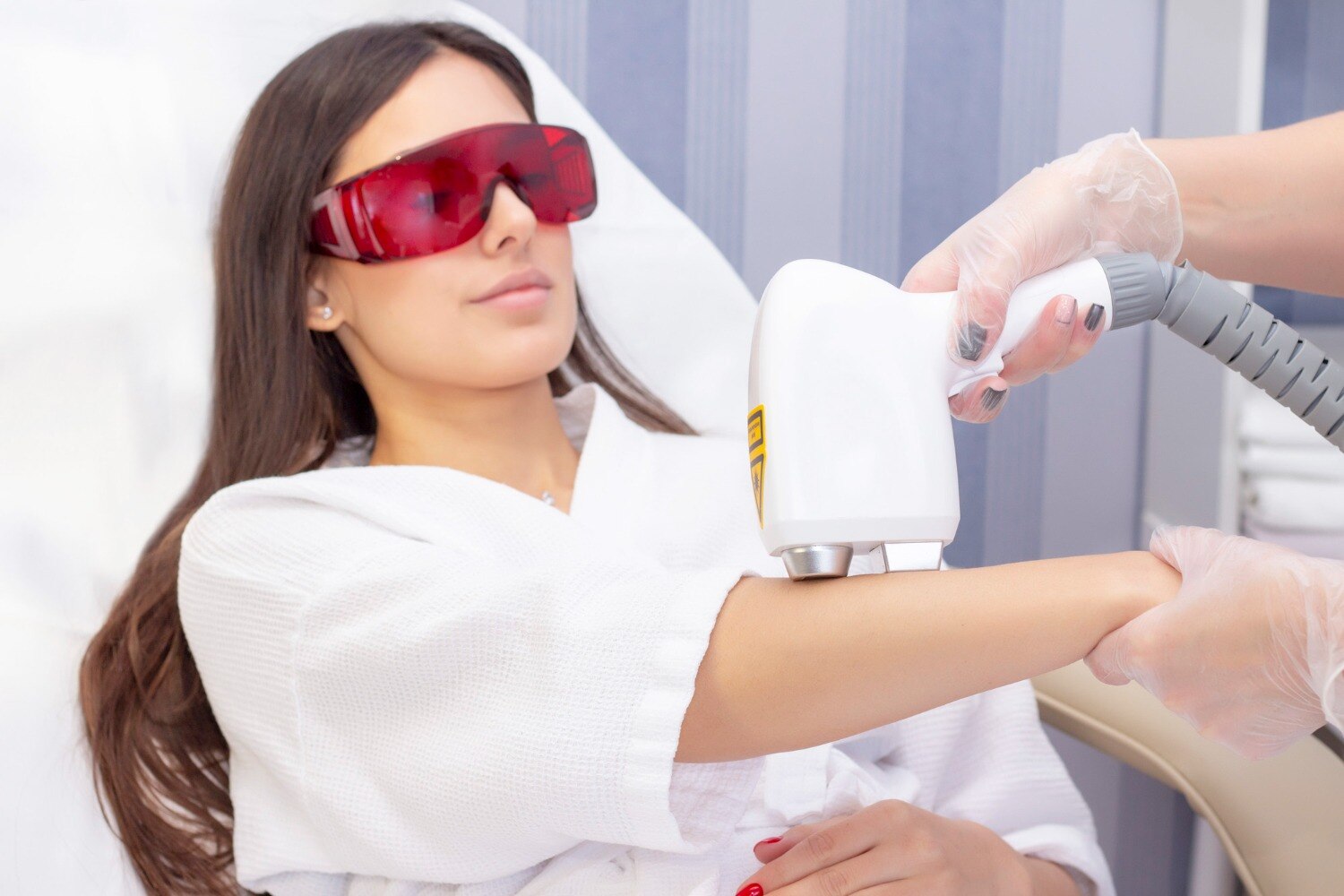
A proper appointment starts with a medical history and skin examination, not with the laser. The clinician checks your skin tone, hair thickness, tanning, sensitivity, active infection, open wounds, abnormal scarring, pregnancy, and medicines or photosensitizing products.
Recent sunburn, artificial tanning, or a darker fresh tan can lead to postponement because the risk of burns and temporary hyperpigmentation or hypopigmentation rises.
The treatment plan should match your skin and hair rather than use one setting for everyone.
- The clinician selects the wavelength and fluence for your skin and hair. A long-pulsed 1064-nm Nd:YAG laser is commonly chosen for darker skin, while aggressive settings on any device can still burn or alter pigmentation.
- A small test patch or test pulse checks how your skin reacts before a larger area is treated. Ask when the response will be reviewed.
- Cooling protects the epidermis and reduces discomfort, but it cannot cancel the risk created by recent tanning or excessive energy.
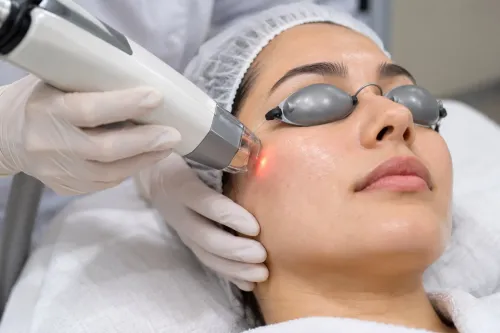
- You receive eye protection. Treatment on an eyelid or immediately beside the eye needs particular caution because laser energy can injure ocular tissue.
| Check | What the clinician does | Risk addressed |
|---|---|---|
| Skin examination | Identifies tan, irritation, infection, wounds, and pigment risk | Burns and colour change |
| Medication review | Assesses photosensitizing drugs and products | Unexpected skin reaction |
| Eye assessment | Fits eye protection and avoids unsafe eyelid treatment | Eye injury |
| Test patch | Observes the skin before full treatment | Excessive reaction |
A dermatologist-led assessment, such as that provided by Dr. Swati Gurav Dermatologist & Cosmetologist, should leave you knowing the device choice, test-patch plan, and reasons for any delay.
Related service
Laser Hair Reduction Achieve smooth, hair-free skin with Laser Hair Reduction at Dr. Gurav’s Skin Hair Laser Clinic, Dombivli. View service → |
How to Prepare and When to Delay Treatment
Shave or trim the area before treatment; do not remove hair from the root. Waxing and threading, tweezing, and epilators can remove the follicle’s target, so stop them several weeks before your appointment.
Before laser hair reduction, use this checklist:
- Avoid tanning and deliberate sun exposure before treatment, and tell the clinician about any recent tan or sunburn.
- Arrive with clean skin free of makeup, deodorant, oils, and other topical products.
- Disclose photosensitising medicines, prescription creams, supplements, pregnancy, active infection, open wounds, and a history of raised or abnormal scarring.
- Ask how long to pause each medicine; do not stop a prescribed drug without the prescriber’s advice.
- Report new coarse facial hair, rapid growth, irregular periods, acne, or voice changes, since these symptoms need medical evaluation before treating the visible hair.
| Decision | What to do | Why it matters |
|---|---|---|
| Root-removing hair removal | Delay waxing and threading until the clinician’s interval has passed | The laser needs pigment in the follicle |
| Tanned or sunburned skin | Postpone treatment until the skin returns to its usual colour and heals | Tanning raises the risk of burns and pigment changes |
| Pregnancy or active skin disease | Defer elective treatment and reschedule after clinical review | Safety data are limited, and damaged skin needs assessment |
Mild redness around follicles can occur. Seek medical attention for severe or worsening pain, blistering, crusting, pus, spreading redness, fever, eye pain, or any vision change.
Frequently asked questions
How does laser hair reduction reduce hair growth?
Laser light is absorbed by melanin in the hair, converts to heat, and damages follicle growth structures through selective photothermolysis.
Which hair and skin types respond best to laser hair reduction?
Dark, coarse hair usually responds best because it contains more melanin. Blonde, red, grey, and white hair respond less because they contain little or no target pigment.
How many laser hair reduction sessions are needed?
Multiple sessions are needed because laser treatment works best on hairs in the active growth phase. Maintenance sessions may be needed as new growth appears.
How should you prepare for a laser hair reduction session?
Avoid tanning, waxing, and plucking before treatment. Shave the area as instructed, and tell the clinician about medicines, skin conditions, or recent sun exposure.
When should laser hair reduction be delayed?
Delay treatment over recently tanned or sunburned skin, irritated or infected areas, open wounds, or skin with an active flare until it has recovered.