A flat brown mark left after a pimple is a different problem from a depressed acne scar, and red post-acne marks need a different strategy again. By the end, you will know which concerns a peel may improve, how clinicians select the acid and depth, what recovery involves, and when another treatment is more appropriate.
Key takeaways
- Superficial peels target flat brown marks, pigmentation and dull, uneven tone.
- Red post-acne marks need a different plan from brown post-inflammatory hyperpigmentation.
- Acid choice, strength and depth depend on your skin type and the condition treated.
- Expect gradual improvement and follow aftercare carefully to reduce irritation and darkening.
Which acne marks and pigmentation can a chemical peel improve?
A superficial chemical peel can gradually improve colour in flat post-inflammatory hyperpigmentation, flat acne marks, superficial sun pigmentation, brown patches and dull, uneven skin tone. It works by loosening pigmented surface cells and encouraging more even shedding; it does not erase every mark after one session.
| Skin change | What a superficial peel may improve | What it cannot do |
|---|---|---|
| Flat acne marks with brown colour | Post-inflammatory hyperpigmentation left after healed acne | Prevent new marks while acne remains active |
| Brown patches and superficial sun pigmentation | Uneven surface colour and mild dullness | Reliably remove recurrent melasma or pigment rooted deeper in the skin |
| Depressed or raised acne scars | The colour around a scar | Rebuild depressed rolling, boxcar or ice-pick scars, or flatten raised scars |
A peel is usually one part of pigmentation treatment, alongside daily broad-spectrum sunscreen and control of the inflammation that caused the marks. Red post-acne marks reflect lingering erythema rather than excess brown pigment, so a peel may not improve them in the same way.
People prone to pigmentation, including many with Fitzpatrick skin types IV to VI, need careful treatment: irritation, picking, excessive frosting or sun exposure can create darker marks. Gradual improvement over a planned series is safer than choosing the strongest peel; deeper treatment increases downtime and the risk of prolonged colour changes or scarring.
Why red and brown post-acne marks need different treatment plans
Red acne marks usually reflect post-inflammatory erythema: lingering redness after an acne lesion heals. Brown acne marks reflect excess melanin, known as post-inflammatory hyperpigmentation. Because these colours have different causes, a peel may be more relevant to brown discoloration than to redness.
A superficial peel can loosen pigmented surface cells and gradually soften a flat brown mark. It does not work as a simple “redness remover,” and irritation from an unsuitable peel can prolong erythema or trigger more pigment, especially in skin that develops post-inflammatory hyperpigmentation easily.
Use this distinction when discussing treatment:
- Flat brown mark: A peel may improve colour over a series of carefully spaced treatments, alongside daily broad-spectrum sunscreen. One session rarely removes the mark completely.
- Flat red mark: Ask whether the redness is fading, persistent, or linked to continuing acne inflammation. A peel may not address its main cause, and aggressive treatment can make the colour more noticeable.
- Depressed or raised mark: This is an acne scar, not merely a colour change. A peel cannot fill an ice-pick, boxcar, or rolling scar; scar-specific procedures require separate assessment.
- Mixed red-and-brown mark: Treatment must account for both problems. Controlling active acne and avoiding picking reduces fresh inflammation before targeting residual pigment.
How clinicians choose the acid, strength and treatment depth
Clinicians choose the acid and depth by matching the problem to your oiliness, active acne, sensitivity, skin type, pigment depth and previous treatments. The strongest peel is not automatically the best one: excessive depth can trigger burns, prolonged pigmentation or scarring.
| Option | Typical role | Choice considerations |
|---|---|---|
| Salicylic acid peel | Oil-soluble superficial treatment | Suits oily, acne-prone skin with comedones; avoid applying it over open or severely irritated lesions |
| Glycolic acid peel | Superficial treatment for dullness, uneven tone and texture | Requires caution when sensitivity or a history of post-inflammatory hyperpigmentation is present |
| Lactic acid peel | Gentler superficial approach | May suit sensitive or dry skin when the goal is gradual tone improvement |
| Jessner peel | Combination superficial peel | Strength and passes depend on acne activity, pigment, sensitivity and prior peeling |
| Selected trichloroacetic acid treatment | More controlled medium-depth treatment | Reserved for carefully selected concerns; higher strengths carry greater burn, pigment-change and scarring risks |
Concentration, pH, contact time, number of passes and neutralization determine how deeply a peel acts. A clinician may choose a superficial treatment for flat brown marks and uneven tone, then delay treatment if inflammatory acne remains active.
Do not substitute a high-strength home peel for clinical treatment. Recently irritated skin, dermatitis, infection, recurrent cold sores or previous aggressive procedures change the risk assessment, particularly in skin prone to post-inflammatory hyperpigmentation.
What happens during a peel and how recovery progresses
Recovery depends on peel depth: a superficial peel usually causes brief flaking, while a medium-depth or deep peel creates longer inflammation and downtime. A stronger peel is not automatically better; deeper penetration raises the risk of prolonged redness, pigment changes, infection and scarring.
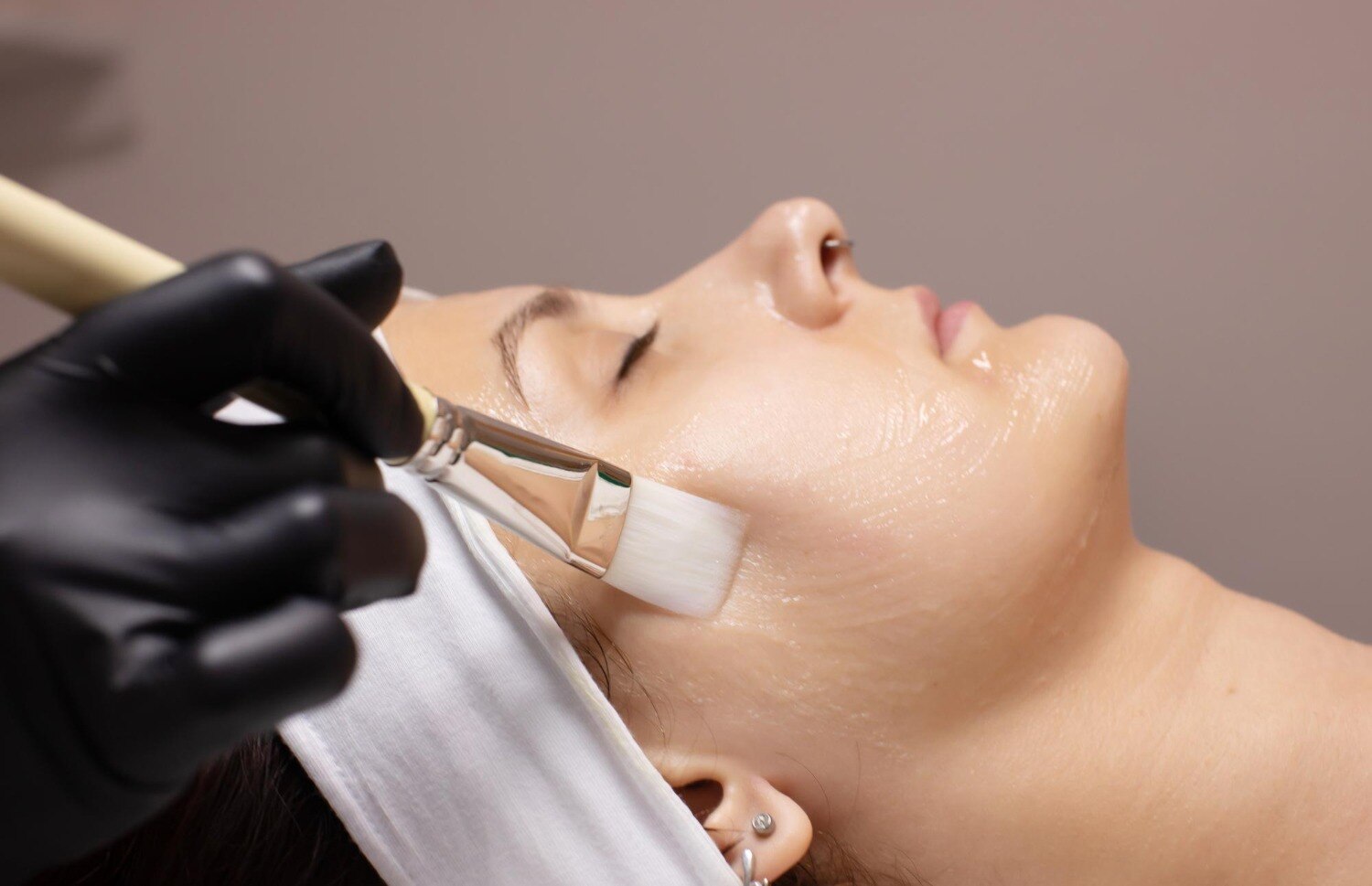
- Cleanse the skin to remove makeup, oil and surface debris.
- Degrease the treatment area so the solution spreads evenly. Poor degreasing can create uneven penetration and patchy irritation.
- Apply the selected solution in controlled layers, avoiding the eyes, lips and broken skin. Stinging, warmth or tightness is expected, but severe or increasing pain is not proof that the peel is working.
- Stop the reaction at the planned endpoint. The clinician performs peel neutralization when the formulation requires it; other acids are removed or allowed to self-neutralize according to their instructions.
- Apply soothing protection and give you specific aftercare instructions.
A superficial peel usually causes mild redness, dryness and fine peeling for several days, with little disruption to daily activities. A medium-depth peel can produce marked redness, swelling, crusting and peeling over roughly one to two weeks.
Deep peels require medical supervision, longer healing and strict follow-up because higher-strength trichloroacetic acid or phenol can cause burns and permanent scarring.
Do not pick peeling skin or add exfoliants. Use broad-spectrum sunscreen every day, avoid direct sun and moisturize as directed; ultraviolet exposure can darken marks and undermine the result. Seek prompt review for blistering, spreading erosions, severe swelling or persistent intense redness.
How to decide whether a peel is suitable for your skin
A peel is suitable only after a clinician confirms that your skin barrier is intact and the cause of the mark is clear. Active inflammatory acne needs control first; applying acid over open, picked, or crusted lesions can worsen irritation and leave more pigment.
1. Review conditions and history. Tell the clinician about dermatitis, eczema, bacterial, fungal, or viral infections, cold sores, and previous reactions to acids. A cold-sore history matters because treatment around the mouth can reactivate it.
2. Check medicines and recent procedures. Mention oral isotretinoin, prescription retinoids, benzoyl peroxide, antibiotics, steroids, and products that already cause peeling. Report recent laser treatment, microneedling, waxing, injections, or another peel; treating before the skin recovers increases chemical peel safety risks.
3. Assess pigment risk. People with Fitzpatrick skin types IV to VI, or anyone who develops dark marks after irritation, needs conservative treatment because excessive frosting, picking, and sun exposure can trigger post-inflammatory hyperpigmentation.
A stronger peel is not automatically better: deeper penetration brings longer recovery and greater risks of prolonged redness, light patches, or scarring.
4. Set the schedule and aftercare together. Your clinician should choose the session interval after observing recovery, then specify gentle cleansing, products to pause, and post-peel sunscreen with broad-spectrum SPF 30 or higher.
Avoid home chemical peels when you have active acne, sensitive skin, or a history of pigment changes; concentration and exposure time are easy to misjudge.
Dr. Swati Gurav Dermatologist & Cosmetologist can use this assessment to decide whether a peel fits the problem or whether acne control, scar treatment, or pigment medication should come first.
Related services
Chemical Peeling Reveal clearer, brighter, and smoother skin with Chemical Peeling treatment at Dr. Gurav’s Skin Hair Laser Clinic, Dombivli. View service → |
HydraFacial Treatment Achieve healthy, radiant, and deeply hydrated skin with HydraFacial at Dr. Gurav’s Skin Hair Laser Clinic, Dombivli. View service → |
Frequently asked questions
Which acne marks and pigmentation can a chemical peel improve?
A superficial chemical peel can gradually improve flat post-inflammatory hyperpigmentation, flat acne marks, superficial sun pigmentation, brown patches and dull, uneven skin tone. It does not erase every mark after one session.
Why do red and brown post-acne marks need different treatment plans?
Brown marks involve excess pigment, while red marks reflect visible redness after inflammation. Because they have different underlying causes, clinicians choose different treatment approaches rather than treating both as pigmentation.
How do clinicians choose the acid, strength and treatment depth?
The choice depends on the type of mark, skin tone, sensitivity, acne activity, previous treatments and the depth of pigmentation. Superficial treatment is used for surface colour and tone concerns; deeper treatment carries greater recovery and irritation risks.
What happens during a chemical peel and how does recovery progress?
A clinician cleanses the skin, applies the selected acid for a controlled period, removes or neutralises it when required, and gives aftercare instructions. Redness, tightness, dryness or peeling can follow, with improvement developing gradually as the skin settles.
How can you decide whether a chemical peel is suitable for your skin?
Ask a qualified clinician to assess your marks, skin sensitivity, current acne, recent sun exposure, medicines and history of irritation or pigmentation after procedures. Postpone treatment when the skin is sunburned, infected, actively irritated or not ready for controlled exfoliation.