Tattoo ink sits in the dermis, so removing it requires controlled treatment rather than rubbing, burning or peeling the skin. You will learn how laser pulses target different pigments, why removal takes several sessions, what recovery involves, and how to decide whether you need complete removal or only enough fading for a cover-up.
Key takeaways
- Laser pulses fragment ink particles without burning off the tattoo.
- Multiple sessions let your immune system clear fragmented ink safely.
- Black ink usually responds more predictably than green, blue, or yellow ink.
- Complete removal is not guaranteed; scarring and residual pigment can remain.
How a laser pulse breaks tattoo ink apart
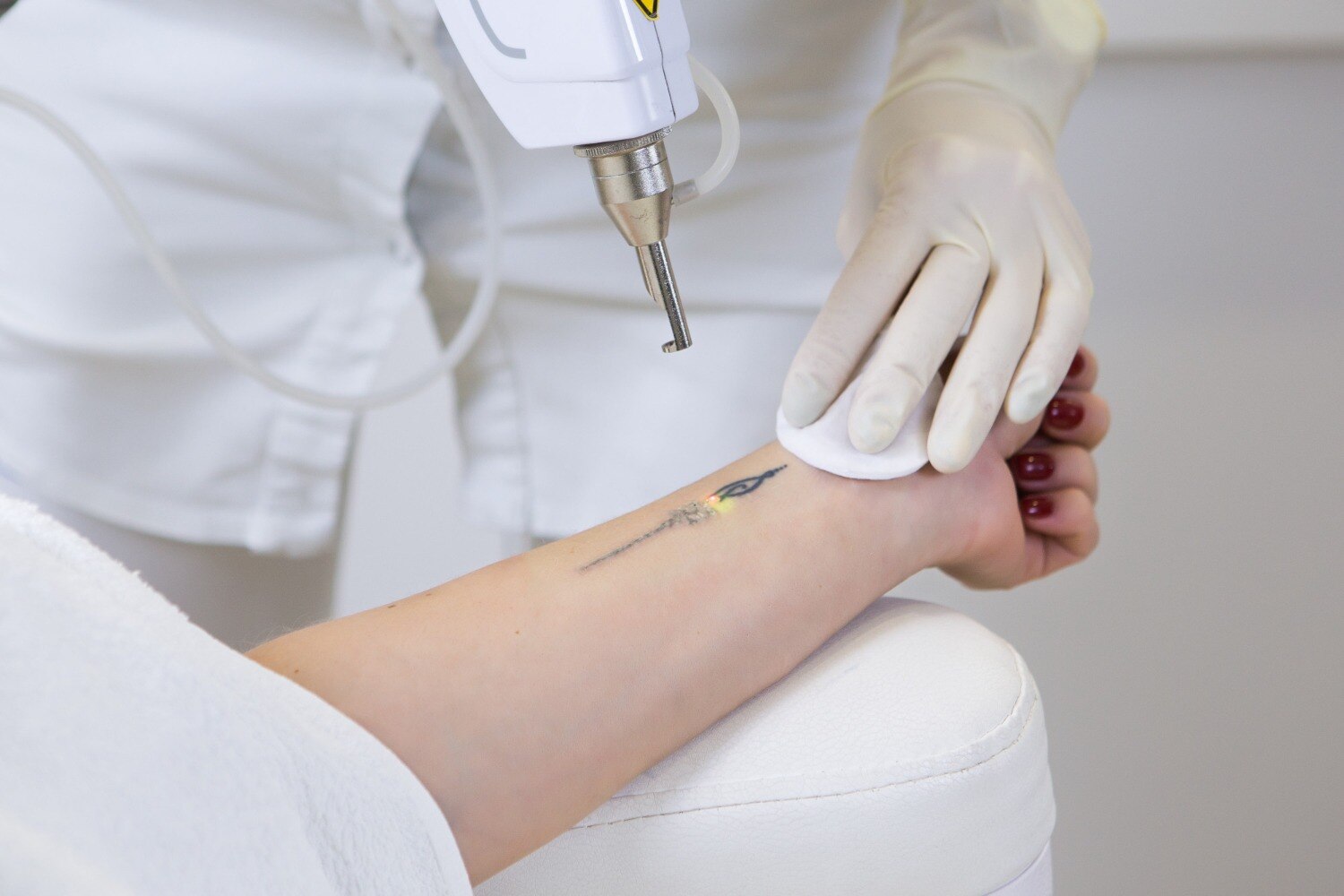
A tattoo is not burned off. A laser pulse targets the ink buried in the dermis, where pigment particles absorb its energy more strongly than surrounding skin. This principle, called selective photothermolysis, uses rapid energy delivery to create intense heat and photoacoustic pressure inside the particles while limiting heat exposure to nearby tissue.
1. A Q-switched nanosecond laser delivers energy in a pulse lasting billionths of a second. The pigment absorbs the light, heats rapidly and breaks into smaller fragments.
2. A picosecond laser delivers the energy in trillionths of a second. Its shorter pulse produces strong mechanical stress with less time for heat to spread, which can help with some resistant pigments; it is not universally superior for every tattoo.
3. After fragmentation, immune cells gradually collect and transport the smaller particles through lymphatic drainage. The tattoo then looks lighter as the body clears pigment between appointments.
The laser does not remove every particle in one pass. Ink depth, density, colour and layering determine how much pigment absorbs the chosen wavelength. Settings must also match your skin tone and any existing scar tissue; copying another person’s treatment settings can cause burns or unwanted lightening of the surrounding skin.
Why removal takes several sessions instead of one
One session rarely clears a tattoo because each laser pass fragments only part of the ink, and the body needs time to remove those smaller particles. The immune system carries them away through the lymphatic system; this immune clearance continues after the skin’s surface looks healed.
Repeating treatment too soon does not speed the process and can increase irritation or pigment changes.
Treatment plans commonly use 6–8 week intervals, with many tattoos requiring roughly 6–10 sessions or more. The fading rate depends on several features:
- Ink colour: black and dark blue often respond more readily than green, turquoise, light blue, pastel, or some yellow pigments.
- Ink depth and density: deeply packed professional ink takes longer than a light amateur tattoo.
- Layering and age: cover-ups add pigment, while older tattoos may have already faded.
- Body location: areas with stronger circulation often clear pigment faster than hands, feet, or lower legs.
- Skin tone, scarring, and previous treatment: these affect the safest laser wavelength and energy settings.
A clinician must adjust wavelength and fluence for your tattoo rather than copy settings from another person. Q-switched nanosecond and picosecond lasers can produce different results for different pigments, but neither guarantees a one-session removal. Progress is judged by gradual lightening between appointments, not by the immediate appearance after a laser pass.
What happens during treatment and recovery
A treatment appointment starts with an assessment of your skin tone, tan, tattoo depth, ink density, colour and any scarring. The clinician chooses the wavelength and energy for those findings; copying settings from another tattoo can cause burns or pigment changes.
You wear eye protection, and a test spot may be used before treating the full tattoo.
Ask whether a topical anaesthetic is suitable if you are sensitive to pain. During the pulses, you may feel rapid snapping or hot pinpricks. A cooling device or cold air can reduce discomfort and limit heat in the surrounding skin.
- Immediately afterward, the area may look white or frosted.
- Redness and swelling can develop over the next several hours.
- Blisters or crusts can form as the skin repairs itself.
- Darkening or lightening of the surrounding skin can last longer, especially after excessive energy or in darker skin types.
Keep the area clean, avoid picking crusts or bursting blisters, and follow the dressing instructions you receive. Protect treated skin from sun exposure before and after sessions; tanning increases the risk of unwanted pigmentary change and can delay treatment.
Dr. Swati Gurav Dermatologist & Cosmetologist can assess healing changes and adjust later settings rather than treating through irritated skin. Contact the clinic for spreading redness, pus, worsening pain or fever.
Related service
Laser Tattoo Removal Safely remove unwanted tattoos with advanced Laser Tattoo Removal treatment at Dr. Gurav’s Skin Hair Laser Clinic, Dombivli. View service → |
How ink colour and skin type change the treatment plan
Black and dark-blue ink usually responds most predictably because it absorbs 1064 nm light efficiently. That wavelength reaches deeper pigment and causes less absorption by epidermal melanin than shorter wavelengths, making it useful across a range of skin tones.
Colour determines the next choice, but no wavelength suits every pigment:
- Red, orange and some yellow inks often respond to 532 nm, which is absorbed near the skin surface but also interacts more with melanin.
- Green, turquoise and some blue inks may need 755 nm or 694 nm because their absorption does not match 1064 nm or 532 nm well.
- Pastel inks contain diluted colour or light-reflecting materials, so they can require more sessions and careful test spots.
- Cosmetic eyebrow, lip or camouflage pigments need extra caution. Iron oxide or titanium dioxide can turn dark, grey or nearly black after laser exposure instead of fading.
Your skin changes the safe treatment range. Darker skin contains more melanin, increasing the risk of post-inflammatory hyperpigmentation or hypopigmentation; a tan or recent sun exposure raises that risk further. Treatment may need to wait until the tan fades, with strict sun protection before and after each session.
The clinician adjusts wavelength, fluence, spot size and pulse settings for your skin tone, tattoo depth, ink density, scarring and previous treatments. Never copy settings from another person’s tattoo: excessive energy can cause blistering, textural change or scarring while leaving pigment behind.
Complete removal, fading and the limits of laser treatment
A successful result means substantial fading with an even texture and no troublesome scarring—not a promise of complete removal. Some ink remains as faint ghosting, especially in dense, layered, green, turquoise, pastel, or cosmetic tattoos.
Before starting, use this checklist:
1. Ask for a realistic endpoint based on your ink colour, depth, density, skin tone, location, and previous treatment. A cover-up tattoo becomes easier after fading, but residual pigment can still affect the new design.
2. Check your skin before every session. Recent tanning or sun exposure increases the risk of burns and lighter or darker patches, so postpone treatment when your skin is tanned and protect it from ultraviolet exposure before and after treatment.
3. Request a test spot for white, flesh-coloured, or pastel cosmetic pigment. Titanium dioxide and iron-containing pigments can turn grey, brown, or black after laser exposure instead of fading.
4. Discuss allergies if the tattoo contains red ink. Fragmented red pigment can rarely cause delayed itching, swelling, eczema-like inflammation, or a serious allergic reaction.
Avoid creams, acids, and abrasive kits: they cannot reach dermal ink selectively and can cause burns, infection, dermatitis, or scars while leaving pigment behind. Laser settings must be individually selected; copying another person’s wavelength or fluence can injure your skin.
If full removal is unrealistic, substantial fading for a cover-up—or leaving the tattoo unchanged—may be safer alternatives.
Frequently asked questions
How does a laser pulse break tattoo ink apart?
The pulse targets ink in the dermis, where pigment absorbs its energy and breaks into smaller particles through heat and photoacoustic pressure.
Why does laser tattoo removal require several sessions?
Your body needs time to clear fragmented ink, and each session targets pigment left behind after the previous treatment.
What happens during laser tattoo removal and recovery?
The treatment delivers rapid laser pulses to the tattoo. Afterward, the area can be tender, red, swollen, or blistered while the skin heals.
How do ink colour and skin type affect treatment?
Ink colours absorb different wavelengths, while skin type affects laser settings, treatment spacing, and the risk of pigment changes.
Can laser tattoo removal completely remove a tattoo?
Some tattoos fade substantially or disappear, but complete removal is not guaranteed. Residual pigment, scarring, or skin-colour changes can remain.