A birthmark is a clinical description, not a single diagnosis, and the wrong laser can create pigment changes without treating the underlying lesion. By the end, you will know how birthmarks are classified, when examination must come before cosmetic treatment, what a laser session involves, and which questions to ask before consenting.
Key takeaways
- Confirm the birthmark diagnosis before choosing a laser.
- Ask how your skin type changes treatment settings and pigment risks.
- Expect multiple sessions when the mark lies deep or responds slowly.
- Get aftercare instructions and complication signs in writing.
What Kind of Birthmark Do You Have?
A dermatologist starts with examination, not a laser. Birthmark diagnosis combines when the mark appeared, whether it has changed, its colour, border, size, depth, location, texture and response to pressure. Dermoscopy can reveal pigment patterns or abnormal vessels; standardized photographs track change, and a biopsy may be needed when the appearance is uncertain.
| Type | Common examples | Clues and treatment direction |
|---|---|---|
| Vascular birthmarks | Port-wine stain; infantile hemangioma | Red or purple marks formed by blood vessels. A port-wine stain is usually considered for pulsed-dye laser; a high-risk infantile hemangioma is commonly managed first with oral propranolol, not cosmetic laser. |
| Pigmented birthmarks | Café-au-lait macule; nevus of Ota | Brown, blue-grey or slate pigmentation. Selected lesions may suit Q-switched or picosecond laser after assessment. |
| Congenital melanocytic nevi | Hairy or raised brown-to-black mole present from birth | Depth and cellular features affect management; laser is not an automatic choice. |
Diagnosis must take priority if a congenital mark is changing, bleeding, ulcerating, itching, becoming painful, or developing an irregular colour, border or asymmetry. Treating first can partially obscure a clinically important lesion. The dermatologist may photograph it, examine it with dermoscopy, or biopsy it before discussing removal.
Fitzpatrick skin type, tanning, melanin level and previous treatment also affect whether laser is safe.
Why the Laser Must Match the Lesion and Your Skin
Laser choice depends on what absorbs the light: blood in a vascular lesion, or melanin in a pigmented lesion. Your Fitzpatrick skin type, current tanning, the mark’s depth, colour, thickness, location, size, and previous treatment also affect the wavelength and the risk of burns or post-inflammatory hyperpigmentation.
- Port-wine stains contain abnormal superficial blood vessels, so a pulsed-dye laser is the established option. PDL 585–595 nm targets blood vessels while limiting heat spread, but thick, nodular, or long-standing adult lesions often need multiple sessions and may not clear completely.
- Hemangiomas are not simply another port-wine stain. High-risk infantile hemangiomas are commonly treated first with oral propranolol; laser has a narrower role for selected superficial residual vessels or ulceration.
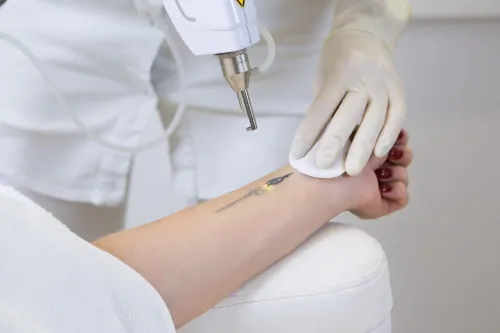
- Café-au-lait macules contain excess epidermal melanin. A Q-switched laser or picosecond laser can lighten selected lesions, but pigment often returns months or years later, especially when multiple marks suggest an underlying pigmentary syndrome.
- Nevus of Ota places dermal pigment deeper in the skin, so Q-switched or picosecond treatment must be selected for depth and skin tone. Darker skin and recent tanning increase the chance of unwanted light or dark patches.
- Congenital melanocytic nevi contain nevus cells, not merely surface pigment. Laser may leave cells behind and make later assessment harder, so suspicious change, melanoma risk, or an atypical appearance calls for surgical assessment rather than cosmetic laser alone.
A dermatologist should examine the lesion before choosing a device. Treating the wrong target wastes sessions and can injure surrounding skin.
What Happens During a Laser Birthmark Session?
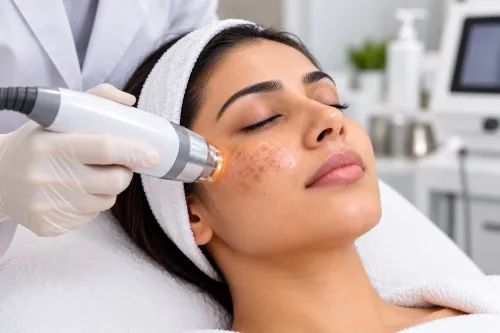
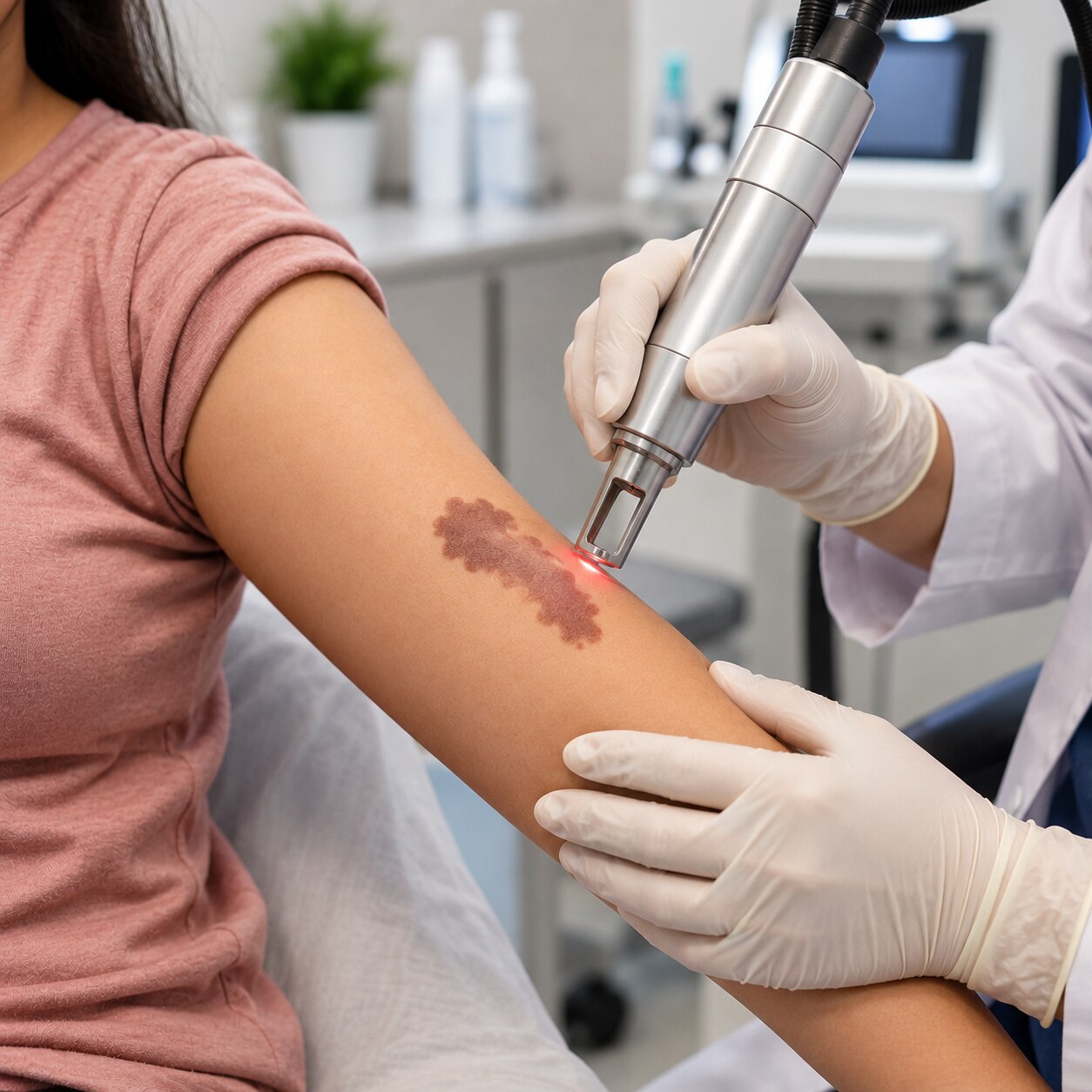
Expect the session to begin with clean, dry skin and a check for recent tanning. If you have tanned, treatment may be postponed because excess melanin raises the risk of unwanted pigment change. Remove makeup and creams from the area unless your clinician gives different instructions.
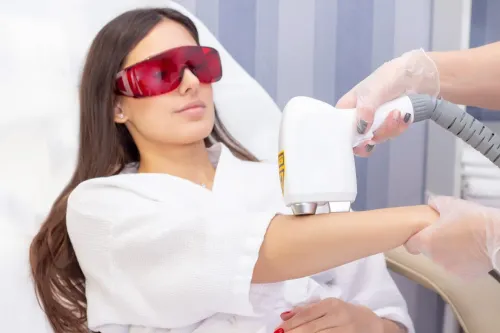
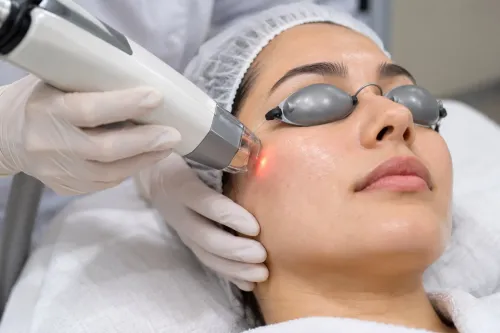
- Everyone in the treatment room wears wavelength-specific laser eye protection. A mark near the eyelid or orbit may need additional shielding or may be unsuitable for routine treatment.
- The clinician may perform a test spot, particularly on darker skin, recently tanned skin, or an area with an uncertain response. The site is then monitored before treating the full mark.
- If numbing cream is used, it is applied for the prescribed time and removed before the laser is used.
Cooling may come from a chilled tip, cooling spray, or cold air before and during treatment. It protects the surface skin and reduces heat-related discomfort. Each burst feels like a quick snap, sting, or rubber-band flick as the laser pulses enter the target.
Most sessions are uncomfortable rather than severely painful, but sensitivity varies by body site and laser type. Tell the clinician if the pain becomes difficult to tolerate.
Redness and swelling are common immediately afterward. Vascular treatment can produce temporary purple discoloration, while pigment treatment can make the area look darker or lighter before it settles. Pinpoint crusting or warmth requires careful aftercare; do not pick or scrub the treated skin.
How Many Sessions Will You Need, and What Can Go Wrong?
Laser treatment sessions are usually spaced far enough apart for the epidermis to heal and for the body to clear treated pigment or vessels. The interval depends on the mark, laser settings, body site, and your reaction; a fixed package cannot predict the final number of visits.
Expect gradual improvement rather than complete removal after one treatment. A mark can respond unevenly, and deeper or thicker areas may remain visible. For café-au-lait macules, birthmark recurrence can appear months or years after initial lightening, especially when several lesions are present or a pigmentary syndrome is suspected.
- Redness, swelling, bruising, and crusting can follow vascular-laser treatment; protect the area, avoid picking, and follow the wound-care instructions until the surface heals.
- Blisters, infection, scarring, prolonged redness, and skin injury need prompt review rather than home treatment.
- Post-inflammatory hyperpigmentation can darken treated skin, while hypopigmentation can leave pale patches. These risks increase with recent tanning and require particular discussion for Fitzpatrick skin types IV–VI.
- Avoid deliberate tanning before treatment and use broad-spectrum sunscreen while inflammation settles. A tan can force safer, lower settings and reduce the treatment response.
A congenital melanocytic nevus requires separate caution: laser may leave nevus cells behind and make later assessment harder. It does not replace surveillance or surgical assessment when the mark changes, bleeds, itches, hurts, or looks unusual.
Questions to Resolve Before You Consent to Treatment
A changing birthmark needs diagnosis before cosmetic treatment. Ask whether the dermatologist recommends dermoscopy, baseline photography, or biopsy before using a laser. Bleeding, ulceration, pain, itching, a new irregular colour, or an uneven border makes partial laser removal unsafe because it can obscure later assessment.
Before signing informed consent, resolve these questions:
- What is the exact diagnosis, and why is this laser appropriate for its depth, colour, thickness, and location?
- What result is realistic: lightening, flattening, hair reduction, or complete removal?
- How many sessions are expected, what happens if the mark recurs, and what alternatives exist?
- Which complications matter for your Fitzpatrick skin type, including prolonged darkening, lightening, blistering, scarring, or infection?
- Must you postpone treatment after tanning, and what sun protection is required?
| Situation | What to confirm | Why it matters |
|---|---|---|
| Changing mark | Is examination, dermoscopy, photography, or biopsy needed first? | Cosmetic treatment must not delay diagnosis. |
| Darker skin | What conservative settings, test spot, and pigment monitoring will be used? | Fitzpatrick types IV–VI face greater risk of persistent pigment change. |
| Child | Who provides consent, and is the child ready for eye protection and stillness? | Safety and cooperation affect treatment quality. |
| Congenital melanocytic nevus | Will surveillance or surgical assessment continue? | Laser may leave nevus cells and complicate later review. |
Dr. Swati Gurav Dermatologist & Cosmetologist can help structure that decision around examination findings, not the mark’s appearance alone.
Related service
Laser Birth Mark Removal Dr. Swati Gurav is a skilled cosmetology and skin specialist in Dombivli, offering advanced laser birthmark removal treatments tailored to individual... View service → |
Frequently asked questions
How is a birthmark diagnosed before laser removal?
A dermatologist reviews when it appeared, changes in size or appearance, colour, border, texture, location and response to pressure. Dermoscopy, standardized photographs or a biopsy can help when the diagnosis is uncertain.
Why must the laser match the birthmark and skin type?
Different birthmarks contain pigment, blood vessels or deeper tissue, so they respond to different laser wavelengths. Your skin type also affects settings and the risk of burns or post-inflammatory hyperpigmentation.
What happens during a laser birthmark removal session?
The clinician confirms the treatment area, protects your eyes, cleans the skin and delivers controlled laser pulses. You may feel snapping or heat, followed by redness, swelling, crusting or temporary colour changes.
How many laser sessions will birthmark removal require?
The number depends on the birthmark type, depth, size, location, laser response and your skin type. A dermatologist should explain the expected range, treatment intervals and what happens if the mark responds poorly.