Dullness, oily shine and visible congestion do not all respond to the same procedure. By checking how a Hollywood Peel works, what condition you actually have, and which safety questions matter, you can decide whether it is a sensible cosmetic option or whether medical acne or dermatitis treatment comes first.
Key takeaways
- Hollywood Peel usually combines carbon lotion with a Q-switched 1064-nm Nd:YAG laser.
- It may improve surface dullness, oiliness and congestion, but results are not permanent acne treatment.
- Postpone treatment for active infection, open wounds, recent tanning or irritated skin.
- Ask which laser, carbon product, risks, aftercare and practitioner qualifications your clinic uses.
What is a Hollywood Peel, and how is the treatment performed?
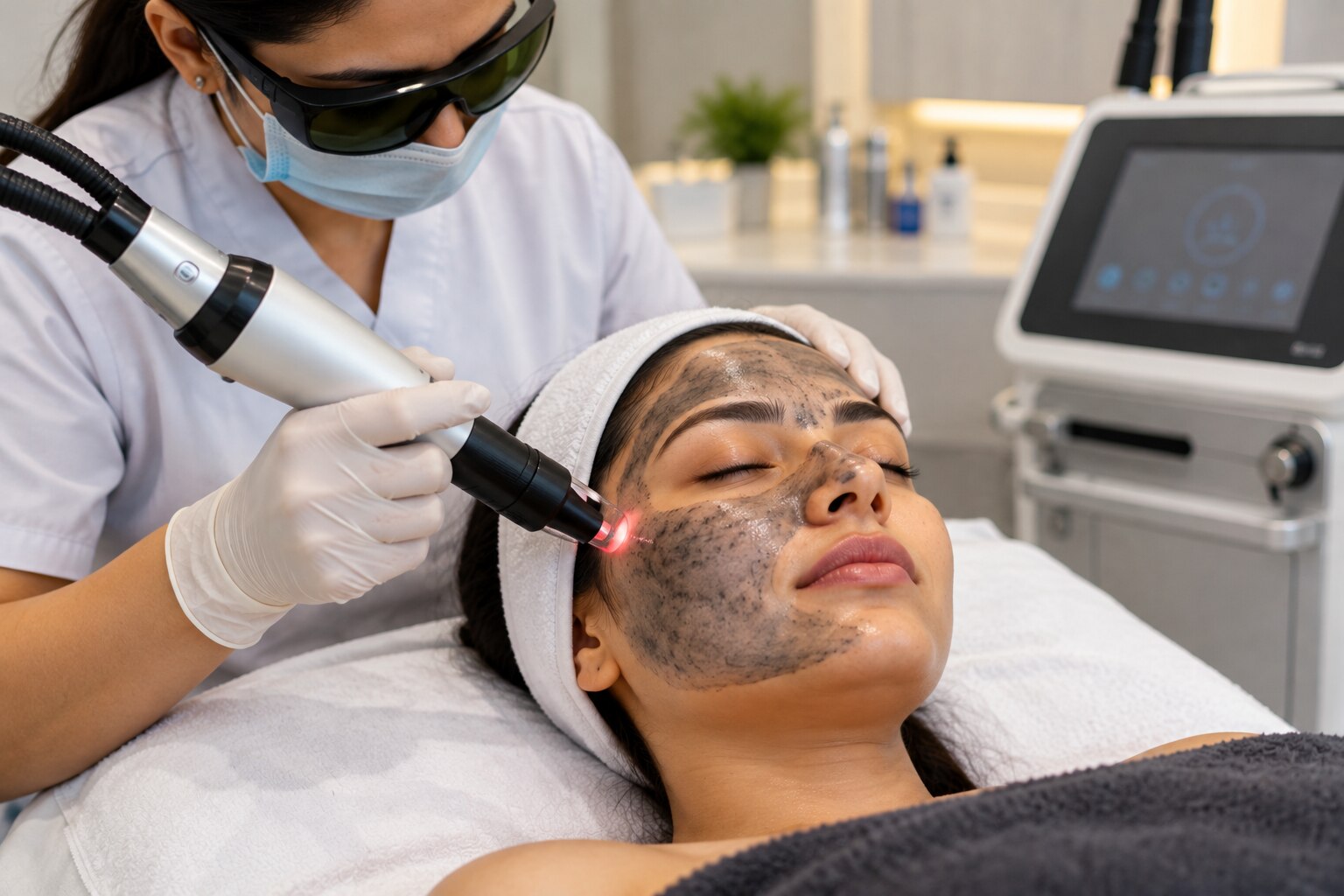
Hollywood Peel is a marketing term, not a standardized medical procedure. It commonly means a carbon laser peel or charcoal laser peel using carbon lotion or a carbon mask, followed by a non-ablative Q-switched 1064-nm Nd:YAG laser.
- Consultation and skin assessment identify active acne, irritation, infection, pigmentation concerns, and whether the treatment is appropriate.
- The skin is cleansed to remove oil, makeup, and sunscreen.
- The clinician spreads the carbon product over the treatment area and allows it to dry. Carbon settles into surface irregularities and around loosened debris.
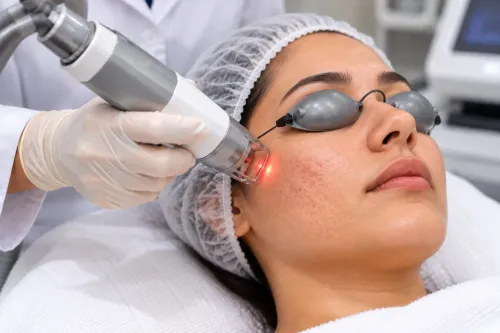
- You and the treatment staff wear eye protection designed for the laser’s 1064-nm wavelength. Closed eyes or ordinary cosmetic eye pads are not substitutes.
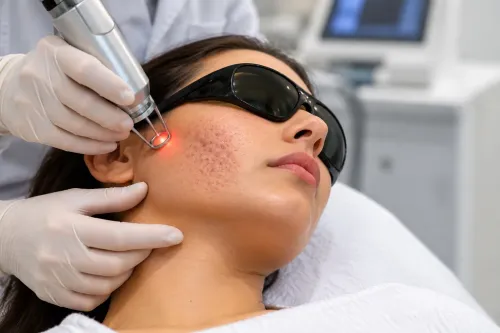
- The clinician makes laser passes over the carbon layer. Carbon absorbs the laser energy and is vaporized or fragmented, producing superficial exfoliation and heat in the skin.
- Remaining carbon residue is removed, followed by a bland moisturiser or sunscreen suited to the treatment plan.
This is not an acid chemical peel: acids such as salicylic, glycolic, or trichloroacetic acid penetrate and exfoliate through a different mechanism. It is also not a HydraFacial, which focuses on cleansing, fluid-based exfoliation, and hydration, or a standard laser facial that treats skin directly without a carbon layer.
The exact device, fluence, pulse settings, number of passes, and carbon-removal protocol vary by clinic.
Which skin concerns can it help, and who is a realistic candidate?
A realistic candidate has intact, stable skin and wants a short-term improvement in mild oiliness, temporary oily shine, uneven texture, superficial congestion or a dull appearance. Removing loosened surface debris and heating the carbon layer can make enlarged pores look clearer or less prominent, but it cannot permanently reduce pore size or guarantee sebum control.
| Concern | Is it a realistic fit? | Important limit |
|---|---|---|
| Dull skin or uneven texture | Often, for a temporary smoother, brighter look | Results do not prove treatment of the underlying cause |
| Oily skin or temporary shine | Possibly, if the skin is calm | Oil production can return; this is not permanent seborrhea control |
| Congested skin or superficial plugs | Possibly, when congestion is mild | It may not remove deep comedones |
| Painful inflammatory acne, pustules or cysts | No cosmetic polishing first | Diagnosis and comedolytic or anti-inflammatory care may include topical retinoids, benzoyl peroxide or salicylic acid |
| Acne scars, melasma or post-inflammatory pigmentation | Not a reliable first choice | These need diagnosis and condition-specific treatment |
Use this checklist before booking:
- Proceed only when your skin is intact and stable.
- Postpone or seek medical review for infection, cold sores, eczema, rosacea, dermatitis, broken skin, sudden acne-like bumps, persistent itching, scaling or redness.
- Ask a clinician to identify whether the problem is acne, folliculitis, seborrheic dermatitis or another condition before cosmetic polishing.
When should you postpone a Hollywood Peel, and what reactions are possible?
Postpone treatment after recent tanning or sunburn, and disclose anything that could increase burns, pigment change, infection, or poor healing. A clinician should review:
- Recent waxing, scrubbing, or aggressive exfoliation
- Isotretinoin or other acne medicines, including recent courses
- Photosensitising medicines
- Pregnancy or breastfeeding
- Active cold sores
- Previous abnormal reactions to light-based procedures
- Keloids or other abnormal scarring
- Previous post-inflammatory hyperpigmentation or hypopigmentation
- A tendency to react to skincare ingredients
Treatment timing depends on the medicine, timing, device, skin type, and clinical protocol, so do not rely on a universal waiting period. The 1064-nm Nd:YAG laser may suit some brown or Black skin because epidermal melanin absorbs this wavelength less strongly than shorter wavelengths.
Pigment risk is reduced, not eliminated; conservative settings and a test spot can matter, especially after previous pigment problems or keloids.
Expected Hollywood Peel side effects include warmth, redness, mild swelling, dryness, sensitivity, fine crusting, temporary darkening or lightening, and occasional acneiform eruptions. “No downtime” is inaccurate. The carbon product itself can cause irritant or allergic dermatitis.
Contact the treating clinic for blistering, severe or increasing pain, marked swelling, a spreading rash, pus, persistent darkening or lightening, or delayed healing.
How does it compare with salicylic acid, chemical peels, HydraFacial and extractions?
Choose based on the problem you want treated, not the treatment name. Salicylic acid is a logical option for oil and superficial comedones after a clinician confirms acne and your skin tolerates it.
| Option | Best fit | Main limitation |
|---|---|---|
| Salicylic acid | Oil, superficial comedones and acne | Does not suit every skin type or acne pattern |
| Chemical peel | Selected acne, pigmentation or texture concerns | Controlled acid penetration; not the same as carbon-assisted laser treatment |
| HydraFacial | Cleansing and hydration-focused visit | Not a substitute for acne treatment |
| Extraction facial | Selected superficial plugs | Poor pressure or hygiene can cause irritation, marks or infection |
| Hollywood Peel | Short-term brighter, smoother appearance with mild surface congestion | Does not permanently control sebum, remove deep acne or correct scars |
A dermatologist-directed chemical peel uses an acid such as salicylic, glycolic or trichloroacetic acid to produce controlled penetration. A Hollywood Peel uses carbon-assisted laser energy instead, so the procedures are not interchangeable. HydraFacial suits someone prioritising cleansing and hydration, while an extraction facial directly removes selected surface plugs.
A Hollywood Peel may improve the immediate appearance of dullness, oily shine or superficial congestion, but one session does not replace a daily acne regimen. It will not reliably clear deep comedones, inflammatory acne or scars. Ask which device, settings, diagnosis and aftercare plan apply; the name alone cannot establish results.
No fixed session count or universal interval is medically dependable.
What should you ask before booking, and how do you care for skin afterward?
Before booking, confirm exactly who will treat you, which device will be used, and how complications will be handled.
- Ask for the laser manufacturer, model and wavelength; “Nd:YAG” alone is incomplete.
- Confirm who performs the procedure and whether a test spot is available, especially after tanning or with a history of pigmentation.
- Request the carbon product’s full ingredient list, including fragrances, preservatives and pigments.
- Confirm wavelength-specific laser eye protection for you and staff. Closed eyes or cosmetic pads are not substitutes.
- Ask whether active acne, pustules or deep comedones need medical treatment first.
- Ask what happens if you develop blistering, severe irritation, persistent darkening or lightening, or delayed healing.
The effort includes a consultation, sun avoidance before and after treatment, and temporary changes to retinoids, scrubs or acids. Repeat visits should follow examination, not a fixed promise, and oily or acne-prone skin may still need ongoing oil-control or acne treatment.
For Hollywood Peel aftercare, cleanse gently, apply a bland moisturiser and use broad-spectrum sunscreen daily. Avoid scrubs, waxing and acids until the skin settles; do not pick flakes or crusts.
A dermatologist consultation Dombivli at Dr. Swati Gurav Dermatologist & Cosmetologist can determine whether dullness, oiliness or superficial congestion suits this procedure or needs medical treatment first. A review also helps separate acne, folliculitis, dermatitis and pigmentation before laser exposure.
Frequently asked questions
What is a Hollywood Peel?
Hollywood Peel is a marketing term commonly used for a carbon laser peel. Treatment usually involves applying carbon lotion or a charcoal mask, then using a non-ablative Q-switched 1064-nm Nd:YAG laser.
Who is a realistic candidate for a Hollywood Peel?
People with mild dullness, oily skin or superficial congestion may be suitable after a skin assessment. It is not a guaranteed treatment for active acne, deep acne scars or persistent pigmentation.
When should you postpone a Hollywood Peel?
Postpone treatment when you have active skin infection, open wounds, significant irritation, recent tanning or a sunburn. Tell the clinician about isotretinoin, photosensitising medicines and recent procedures before booking.
How does Hollywood Peel compare with salicylic acid, chemical peels, HydraFacial and extractions?
Salicylic acid targets oil and clogged pores, chemical peels use controlled acids, HydraFacial combines cleansing with suction and infusion, and extractions remove selected comedones. A Hollywood Peel uses carbon followed by laser, so the best option depends on your skin findings and treatment goals.