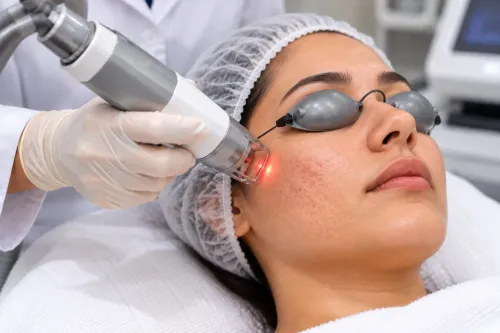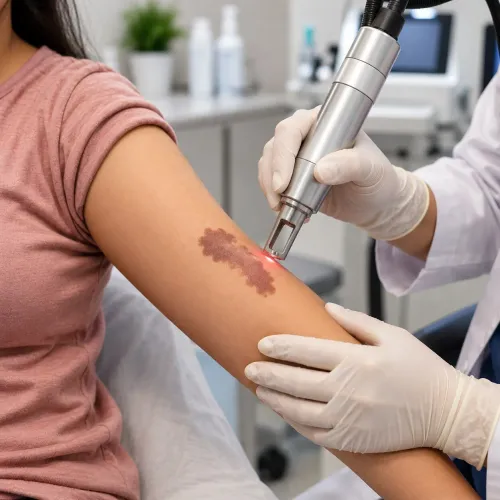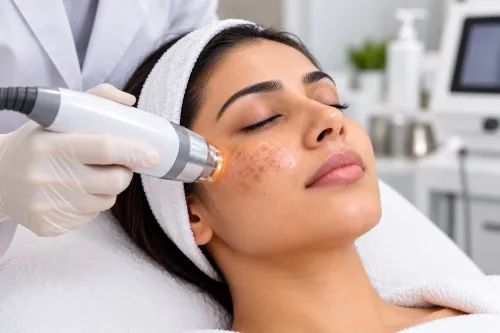
A depressed ice-pick scar, a tethered rolling scar, a red flat mark and a raised keloid are not the same treatment problem. By identifying the scar’s shape, depth, activity and surrounding skin changes, you can judge when laser resurfacing fits, when another procedure works better, and when a combination plan is safer.
Key takeaways
- Identify whether the scar is depressed, raised, tethered, or sharply edged.
- Treat active acne, infection, and open wounds before resurfacing.
- Match laser depth and technique to the scar’s structure.
- Choose combination treatment when laser alone cannot release or fill the scar.
Identify the scar before choosing the laser
Laser scar treatment is appropriate only after identifying whether the scar is depressed, raised, tethered, or sharply edged. Atrophic acne scars lose dermal volume; hypertrophic scars stay raised within the original wound, while keloids extend beyond it. An open wound, active infection, or uncontrolled inflammation requires postponing resurfacing.
| Scar pattern | Depth and structure | How laser fits |
|---|---|---|
| Superficial texture | Shallow unevenness without major volume loss | Non-ablative fractional laser can improve texture with less downtime |
| Boxcar scars | Moderate depressions with relatively sharp edges | Fractional CO2 resurfacing may soften the edges and surface |
| Rolling scars | Broad depressions tethered by fibrous bands | Subcision must release the bands; laser alone cannot reach them |
| Ice-pick scars | Narrow channels extending deeply | Surface-only laser passes often perform poorly; punch excision or punch elevation may fit better |
| Hypertrophic scar or keloid | Raised, abnormal scar tissue | Avoid aggressive resurfacing; consider silicone, steroid injections, pressure therapy, or selected vascular-laser care |
Scar age alone does not decide eligibility. A newly formed scar that is red, itchy, or raised needs assessment for active scar behaviour, while a mature scar must be fully healed before textural resurfacing. Depth, skin response, wavelength, and settings determine the number of sessions, and collagen remodelling continues for months.
Judge improvement against risks such as pigment change, prolonged redness, acne, infection, or additional scarring—not complete removal.
Separate a true scar from colour, pores and active acne
Before treating a suspected acne scar, check whether the mark is a structural depression, a colour change, an enlarged pore, or active disease.
1. Examine the skin in direct and side lighting. A superficial textural change becomes visible through fine unevenness, while post-inflammatory hyperpigmentation is flat brown, red, or grey colour without a measurable dip. Enlarged pores have regular openings and do not create broad shadowed depressions.
2. Palpate the area and assess its response to stretching. A moderate dermal depression feels shallow and may soften when the skin is stretched. Deep tethered scars remain pulled downward; rolling scars feel broad and bound by fibrous bands, boxcar scars have sharper edges, and ice-pick scars are narrow with a deep opening.
3. Check whether acne is still active. Count inflamed papules, pustules, nodules, crusting, or draining lesions, and look for eczema, dermatitis, an open wound, or infection. Treating ongoing acne first reduces new scarring, while resurfacing inflamed skin increases complications.
4. Identify raised rather than depressed scarring and record the patient’s history. Hypertrophic scars stay within the original wound; keloids extend beyond it and can recur after injury. Ask about previous keloids, melasma, or post-inflammatory hyperpigmentation, then document sun exposure and whether the skin is fully healed before selecting laser treatment.
Match the treatment to the scar’s structure
A shallow-to-moderate depressed scar can suit resurfacing, but a deep tether or raised scar needs a different mechanism. Match the procedure to the structure rather than choosing the strongest laser.
| Scar pattern | Better-fit options | Why and trade-off |
|---|---|---|
| Ice-pick scar | Punch excision or punch elevation; fractional CO2 laser as an adjunct | A narrow, deep defect may not respond to surface resurfacing alone. |
| Boxcar scar | Fractional CO2 laser, Er:YAG, microneedling or MNRF | Broad shallow edges respond better to collagen remodeling; sharp, deep edges need targeted treatment. |
| Rolling scar | Subcision, often followed by fractional CO2 laser, fractional non-ablative laser, microneedling or MNRF | Laser improves texture but cannot release the fibrous bands pulling the skin downward. |
| Red, flat scar | Pulsed-dye laser (PDL) | PDL targets visible blood vessels; resurfacing targets texture, not redness. |
| Hypertrophic scar or keloid | Silicone therapy, pressure therapy, intralesional corticosteroid, selected vascular-laser treatment | Aggressive ablative resurfacing can worsen activity; keloids can recur. |
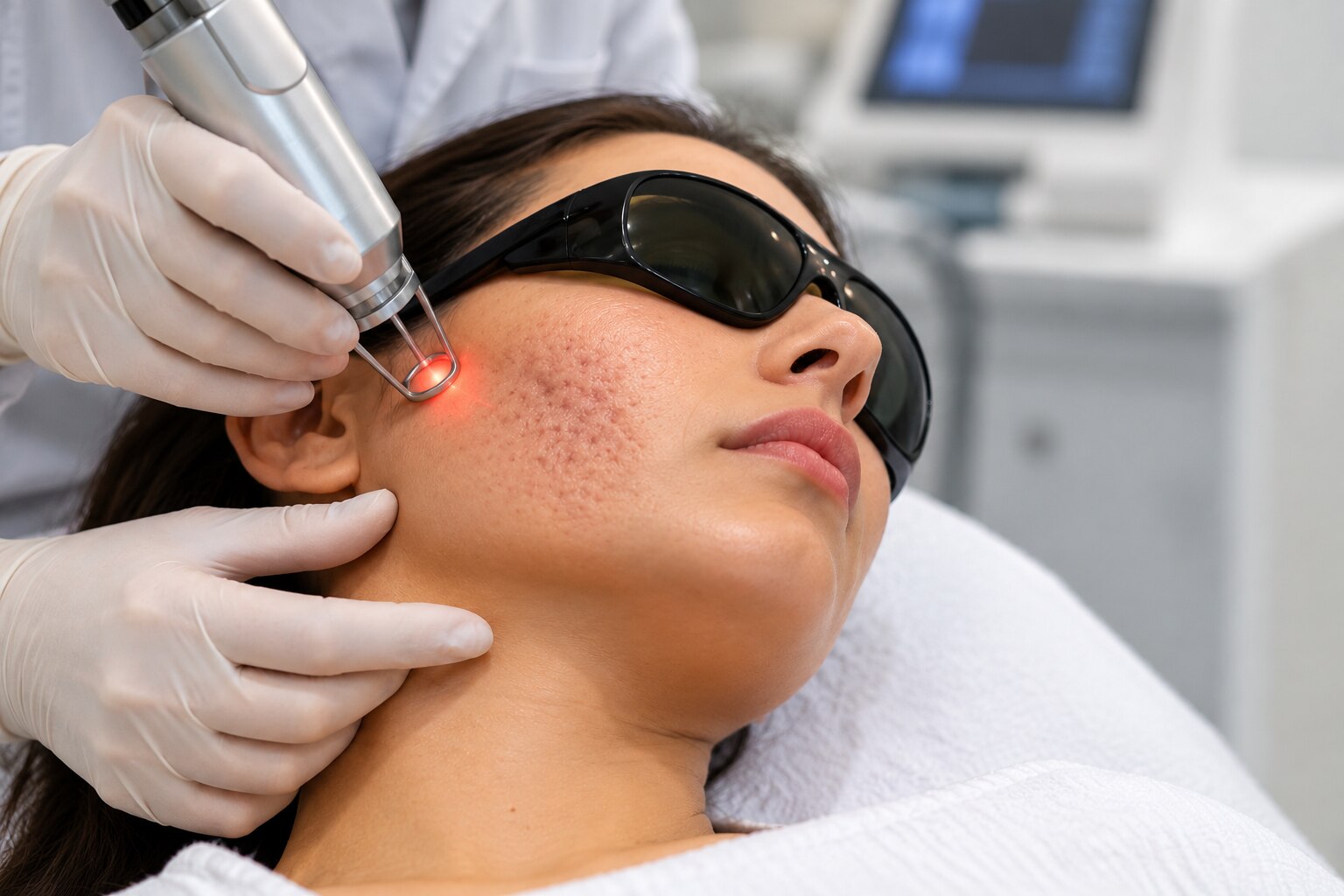
Fractional CO2 laser removes microscopic columns of epidermis and dermis, so it usually offers stronger textural change with more oozing, crusting, redness and pigment risk. A fractional non-ablative laser heats the dermis without vaporising the surface, giving shorter recovery but often requiring more sessions.
Microneedling and MNRF provide non-laser remodeling options when downtime or pigment risk matters.
Expect a series, not a one-time correction. Collagen remodeling continues for months, so judge progress after healing rather than immediately after treatment.
Know when laser alone is the wrong plan
Stronger laser settings are the wrong answer when the scar’s main problem lies beneath the surface, in a narrow tract, or in abnormal scar activity. Fractional resurfacing can soften texture, but it cannot release fibrous bands, replace substantial lost volume, or safely flatten every raised scar.
Use the treatment that addresses the structure:
- Choose subcision for rolling scars tethered by fibrous bands. The needle releases the attachment so the depression can lift; laser alone only treats the surface above it.
- Consider punch excision for a narrow, deep ice-pick scar. The procedure removes the scar column and closes the small wound, rather than repeatedly ablating the surrounding skin.
- Consider punch elevation for selected sharply edged or deep boxcar scars. It lifts the depressed scar floor while preserving nearby skin.
- Use fillers when a broad depression reflects lost dermal volume that resurfacing cannot replace. Filler selection, injection depth, and vascular safety require an experienced medical injector.
- Treat hypertrophic scars and keloids as active raised scars, not acne depressions. Silicone sheets or gel, pressure therapy, intralesional corticosteroid injections, and selected vascular-laser treatment may be used; keloids can recur after treatment.
- Defer resurfacing over an open wound, active infection, or uncontrolled inflammation. More energy in that setting increases healing problems instead of correcting the scar.
A combined sequence often makes more sense than one aggressive session: release or elevate the depression first, restore volume when needed, then resurface remaining texture after healing.
Balance expected improvement against recovery and risk
A darker skin tone or a history of pigment darkening changes the risk calculation: aggressive ablative treatment can trigger post-inflammatory pigmentary change. Choose conservative settings, strict sun protection, wider intervals, and a test spot when appropriate; a stronger setting is not automatically a better setting.
1. Treat activity before texture. Red, itchy, enlarging scars need scar-directed care rather than routine resurfacing. Hypertrophic scars and keloids may require silicone, pressure therapy, intralesional corticosteroid, or selected vascular treatment such as a pulsed-dye laser. Keloids can recur, so recurrence risk belongs in the decision from the start.
2. Confirm healing before resurfacing. Defer treatment over an open wound, active infection, or uncontrolled inflammation. A newly formed red scar may still qualify for an early vascular or scar-directed approach, while a fully healed mature scar may be assessed for textural treatment.
3. Match downtime to the finding. Ablative fractional treatment brings more resurfacing effect but also oozing, crusting, prolonged redness, infection, acne or milia, pigment change, and rare additional scarring. Non-ablative treatment usually heals faster but often requires more sessions and produces slower improvement.
4. Use the consultation to set the sequence. Dr. Swati Gurav Dermatologist & Cosmetologist should assess skin tone, scar depth, tethering, medicines, previous pigment response, and sun exposure before selecting settings or combining procedures. Compare realistic improvement with recovery and risk, not with complete scar removal.
Related service
Acne , Scar and Pigmentation Management Acne , Scar and Pigmentation Management Dr. Swati Gurav is a leading skin and cosmetology specialist in Dombivli, offering expert care for acne, acne scars, and pigmentation concerns. View service → |
Frequently asked questions
How do you identify a scar before choosing laser treatment?
Classify it as depressed, raised, tethered, or sharply edged, then check for active inflammation, infection, or an open wound.
How can you tell a true scar from pigmentation or enlarged pores?
A true scar changes skin texture or structure. Flat colour, visible pores, and active acne need different treatment plans.
When is laser alone the wrong treatment for a scar?
Laser alone is unsuitable when the scar is tethered, significantly volume-deficient, raised beyond the wound, or linked to active acne or inflammation.
What should you weigh before laser scar treatment?
Compare expected improvement with treatment depth, downtime, discomfort, pigment-change risk, and the number of sessions required.