Skin concerns can range from temporary irritation to persistent conditions that require medical evaluation. Understanding Dermatology Diseases can help people recognise when a skin, hair, nail, or scalp problem deserves attention rather than repeated self-treatment.
For patients in Dombivli, Maharashtra, concerns such as recurring acne, pigmentation, itching, rashes, fungal infections, hair loss, dandruff, warts, and nail changes are common reasons to consult a dermatologist. The appearance of two conditions can sometimes be similar, which is why identifying the underlying cause is important.
Common dermatological conditions that affect the skin
Dermatology covers a broad range of medical conditions. Frequently evaluated concerns include:
- Acne and acne-related pigmentation
- Eczema and dermatitis
- Fungal infections
- Psoriasis
- Urticaria and allergic skin reactions
- Bacterial and viral skin infections
- Warts
- Unusual moles and growths
- Excessive hair fall
- Dandruff and scalp disorders
- Nail infections and nail changes
A rash that looks like an allergy, for example, may have a different underlying cause. Similarly, persistent pigmentation may need evaluation before cosmetic treatment is considered.
What happens during a dermatology consultation
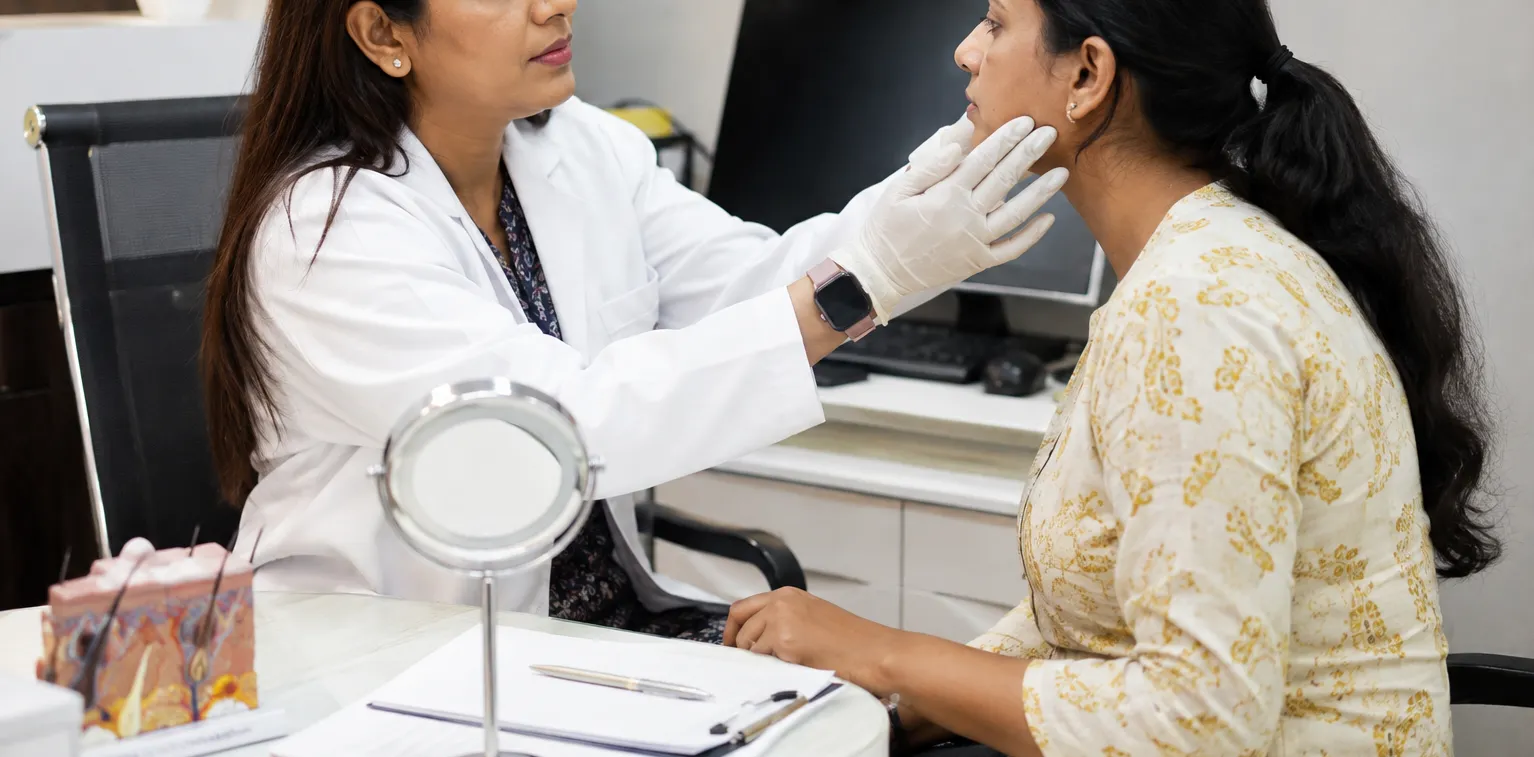
Evaluation usually begins with a detailed history. A dermatologist may ask when the symptoms started, whether they are worsening, what products or medicines have been used, and whether similar problems have occurred previously.
The skin, scalp, hair, or nails are then examined. Additional investigations may be recommended when the diagnosis cannot be established through clinical examination alone.
Treatment depends on the condition and may involve topical medicines, oral medication, procedural treatment, lifestyle advice, skincare changes, or a combination of approaches.
How long does recovery take
There is no single recovery period for dermatological diseases. A minor infection may improve relatively quickly with appropriate treatment, while acne, pigmentation, eczema, psoriasis, and hair disorders can require longer-term management.
The important point is to follow the prescribed treatment for the recommended period. Stopping medication as soon as symptoms improve can sometimes contribute to recurrence.
Benefits of timely dermatological care
Early evaluation can help identify the cause of symptoms and reduce unnecessary experimentation with products.
Professional care may also help:
- Control persistent symptoms
- Reduce inflammation
- Prevent avoidable complications
- Minimise acne scarring
- Identify triggers
- Establish an appropriate skincare routine
- Monitor recurring conditions
Possible treatment risks
Risks depend entirely on the treatment being used. Medicines and procedures may cause irritation, dryness, sensitivity, allergic reactions, or other side effects in some patients.
This is why treatment should be based on diagnosis rather than simply copying a product or medicine that worked for someone else.
Care before and during treatment
Before a consultation, patients can make a note of symptoms, current skincare products, medicines, allergies, and previous treatments. Avoid repeatedly applying new home remedies immediately before evaluation, particularly when the skin is already irritated.
During treatment, use prescribed medicines correctly and follow recommendations regarding moisturisers, cleansers, sunscreen, scalp products, and other supportive care.
Frequently asked questions
Should every skin rash be treated by a dermatologist
Minor irritation may settle naturally, but persistent, spreading, painful, recurrent, blistering, or severely itchy rashes deserve medical evaluation.
Can skin conditions return after treatment
Some can. Conditions such as acne, eczema, psoriasis, dandruff, and certain allergies may recur and require ongoing management.
Should unexplained moles be checked
A new or changing mole, especially one showing changes in size, shape, colour, borders, bleeding, or persistent irritation, should be evaluated.
For people in Dombivli dealing with persistent skin, hair, scalp, or nail concerns, appropriate diagnosis is the foundation of effective treatment. Dr. Swati Gurav Dermatologist and Cosmetologist evaluates dermatological concerns with treatment planning based on the individual condition rather than a one-size-fits-all approach.
Keywords